
Gayatri Kalra Sehgal
- What are Reflexes?
- Why are they Important?
- What are Primitive Reflexes?
- What is ATNR?
- Is ATNR Activated?
- What is Retained ATNR?
- Case Study
- Identifying Retained ATNR
- Impact on Academics
10. Exercises for Integration
REFLEXES
A reflex is an automatic response to a stimulus.
Certain sensations or movements produce specific muscle responses.
What does it mean?
Let us understand it with an example. When a person’s finger touches fire, the person, in a fraction of a second, withdraws the finger from it.
It is a reflexive action.
In newborns, you may have noticed many reflexive responses.
For example, when you stroke the palm of your baby with your fingers, the baby curls his or her fingers around your finger. It is a response to the sensation that you produced. The baby’s wrapping the fingers around your finger is the muscle response given by the baby. This response or the reflex is called ‘Palmer Reflex’ or ‘Grasping Reflex.’
PRIMITIVE REFLEXES
What are ‘Primitive Reflexes?’
Primitive reflexes are automatic behaviours. These behaviours don’t have to be learned or practised by the baby.
Imagine trying to teach your newborn how to poop. Thankfully, you don’t have to; because babies are born with approximately seventy known primitive reflexes. Like blinking or coughing.
These reflexes are suppressed by the development of the frontal lobes as a child transitions normally into child development.
Why are primitive reflexes important?
Primitive reflexes help babies in the birthing process and thrive.
The presence and strength of the
Primitive reflex is a crucial indicator of the development and functioning of the nervous system.
Your baby’s central nervous system; CNS includes the brain and spinal cord. When you stroke the baby’s palm, it automatically orders your baby’s muscles to respond to the stimulus provided by you. At this stage, the response is involuntary.
By the time your baby reaches 4 to 6 months of age, their brain should have matured and replaced these involuntary movements with voluntary ones. In simple words, the baby’s brain should now be able to decide when and how to respond to a stimulus.
ATNR
What is ATNR?
Asymmetric Tonic Neck Reflex is a primitive reflex and emerges at 18 weeks in utero. It is also known as ‘Fencing Reflex’ because of the position the baby acquires when the stimulus is provided.
How can we check if ATNR is active in the baby?
Carefully lay the baby with his or her back on the bed. Gently turn the baby’s head on one side, say you gently turn the head towards the baby’s left side. Notice that the baby, in some time will open or extend his or her left limbs; the left arm and the left leg, and curls the right arm and the right leg inward like a ‘Fencer’ taking the ‘Fencing Position.’
RETAINED ATNR
What is ‘Retained ATNR’?
These primitive reflexes are involuntary at birth. As the baby develops most of the reflexes, should become voluntary and disappear at a particular age. But in some cases, these reflexes do not disappear or become voluntary; these reflexes are ‘retained’ by the baby much after the expected age of disappearance. They may even remain undiagnosed till adulthood and may reappear because of some reasons like stress. These hidden and retained reflexes are the precursors of developmental delays in children. These leave multiple effects on the child’s life.
CASE STUDY
- ATNR may sometimes be an involuntary jerky movement and may surface after many years under specific conditions like stress.
- Sam (with undiagnosed and a Retained ATNR) is driving a car and is getting late to the workplace. With the annoying traffic signals and too much noise on the road, Sam begins to lose his cool. The signal turns amber and then green. Upset Sam; looks to the left and then to the right; he gradually moves the car while his head turns towards the left. While in the traffic; he extends his right arm, losing control over the staring wheel; and then, a loud BANG!
Sam opens his eyes in the hospital, clueless!
- PLEASE IDENTIFY AND DIAGNOSE THE PRIMITIVE REFLEXES AT THE RIGHT TIME.
IDENTIFYING RETAINED ATNR:
Method:1
- Ask the child to stand comfortably on the floor or ground.
- Ask the child to stretch both the arms in front with their palms facing the ground.
Observe:
Does one or both the elbows of the child buckle or bend?
Method: 2
- Ask the child to take the crawling position with all the fours on the ground.
- Next, without touching the ears of the child, turn the head of the child to one side; say you turn the head of the child towards the left.
Observe:
- If the right elbow of the child buckles or bends (Partially Integrated ATNR).
- Do both the elbows bend (Retained ATNR)?
- How comfortable is the child while crawling on the floor?
Method: 3
- Ask the child to stand comfortably on an even surface.
- Then, ask the child to stretch one arm in front and point the index finger at the ceiling.
- Next, ask the child to draw a big imaginary circle in the air with one finger.
- While the child draws the big circle in the air, the finger has to point at the ceiling or the sky.
Observe:
- When the child draws the circle in the air, does the child use only the arm, or does the child move the pivot of the body along with the arm to draw the circle?
- The child with retained ATNR may have difficulty in crossing the imaginary vertical mid-line of the body.
- Say, the child is using the right hand’s index finger to draw the circle in the air; while drawing the circle, the moment the child draws the left side of the circle; the child crosses the imaginary vertical midline of the body. The body substitutes the lag and uses the pivot of the body to draw and complete the circle in the air.
IMPACT ON CHILD’S ACADEMICS:
1. Poor Eye-Hand Coordination:
- Many times, children with retained ATNR have difficulty in skills where the eye and hands are required to work simultaneously like beading, lacing, block building.
- They exhibit an unusually tight grip on their pencil and may prefer to write with a straight arm. Check the enormous pressure they apply from the shoulder and onto their hand while writing. Their hands may shake while writing.
2. Visual Tracking:
- The child may have difficulty in shifting visual focus from an object or a toy kept at a distance to an object kept comparatively closer.
- For reading, the eyes need to move along written text by fixating on a word and then the next word. The child may exhibit poor horizontal eye movement and hence experience difficulty in visual tracking of the words for reading.
- They may: skip words, skip lines, move their head too much when reading, use their finger to keep place when reading.
- As they copy from the board, they may find it difficult to keep the ‘place’ of the word written on the board and then copy it onto their notebook.
- They may have trouble comprehending what they read.
- They may have a poor expression of ideas on paper.
- Later, the child may show signs of Dyslexia.
3. Motor Abilities:
1. They have difficulty in balancing and body-coordination activities.
2. They have a tough time learning to ride a bicycle, catching and throwing a ball, walking on a beam, etc.
4. Bilateral Integration:
- Bilateral integration refers to the ability to coordinate both sides of the body simultaneously; in a controlled and organized manner.
- You will observe the child struggles with stabilizing paper with one hand while writing or cutting with the other, opening a jar by holding the jar in one hand and opening the jar-lid with the other.
5. Ambiguity in Laterality:
- The child may remain confused about the dominance of the hand. The brain may be unable to decide which hand will dominate the activity, the right or the left till a later age; 6 to 7 years.
- They have a tough time ‘multi-tasking.’
Exercises to Integrate ATNR
Exercise:1
Required: A yoga mat (optional)
Method:
- Ask the baby or the child to lie on the mat with the tummy down and arms straight close to the waist of the child.
- Next, ask the child to turn the head (on one side) say the child turns his or her head towards
- the left side.
- Then, ask the child to lift and turn the left arm and place it next to their head.
- Next, ask the child to lift and bend the left knee as shown in the figure.
- Then, ask the child to repeat the exercise on the other side.
Exercises to Integrate ATNR
Exercise: 1
Required: A yoga mat (optional)
Duration:
Maintain this position for ten seconds and go up to thirty seconds in one set.
Repetitions:
Three sets, three times in a day.
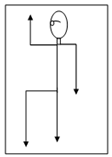
Exercise: 2
- Ask the baby or the child to lie on the mat with tummy down and arms straight close to the waist of the child.
- (Previous exercise)Ask the child to turn the head (on one side), say to the left side. Then, ask the child to lift and turn the left arm and place it next to their head. Next, ask the child to lift and bend the left knee.
- Now, while the child is still in the above-mentioned position, ask the child to turn the head in the opposite direction. Please refer to the given picture.
- Then ask the child to repeat the exercise on the other side.
Duration:
1. Maintain this position for ten seconds and go up to thirty seconds in one set.
2. Then, ask the child to straighten the arms, legs and face and then help the child to do the same exercise for the opposite side. Again, maintain this position for ten seconds and go up to thirty seconds in one set.
Repetitions: Three sets, three times a day.
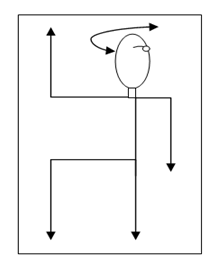
Required: A soft ball
Yoga mat (optional)
Area for the child to crawl
Method:
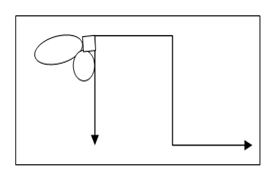
1) Ask the child to take the crawling position.
2) Fix a softball in between the child’s neck and the shoulder and ask the child to crawl.
Duration:
Begin by encouraging the child to do it for 2 to 3 minutes and increase it to five minutes per set.
Repetitions:
Three sets, three times a day.
Do these exercises regularly for at least eight weeks.
Disclaimer:
Any information provided in this blog is for informational purposes only. It should not be considered as a substitute for advice from a doctor. I strongly recommend seeking medical advice before proceeding.
 Gayatri Kalra Sehgal